
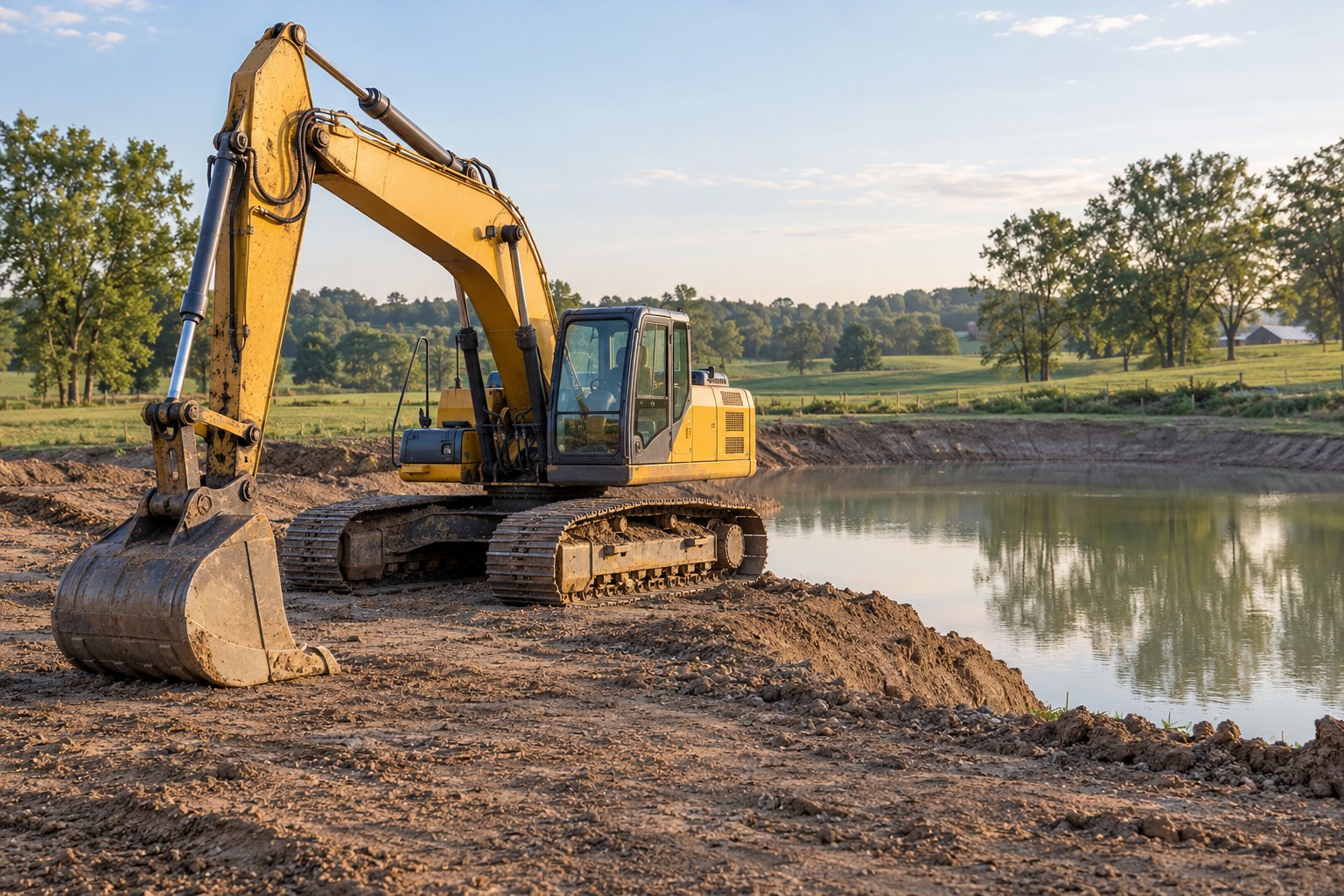
Choose an excavator for a pond by excavation volume, soil, working reach, site access and how you will move the spoil. A 3–6 metric-ton mini excavator may suit a small, accessible landscape pond, while a 15–25 metric-ton machine is a useful starting point to discuss for larger bulk excavation. These are planning ranges, not specifications for every pond. Acreage alone cannot choose the machine: a shallow pond in easy soil and a deep excavation in wet clay can require very different equipment and construction plans.
Quick Answer
| Project condition | Equipment to discuss | Main decision |
|---|---|---|
| Small landscape pond, good access | Compact excavator, often 3–6 metric tons | Bucket capacity, reach and ability to handle spoil. |
| More volume or harder digging | Mid-size excavator, often 8–15 metric tons | Whether improved production offsets transport and rental cost. |
| Larger bulk excavation | Full-size excavator, often 15–25 metric tons or more | Excavation volume and the truck or earthmoving plan. |
| Wet ground or cleanup from shore | Specialist method; sometimes purpose-built long reach | Ground support and safe working envelope, not weight alone. |
Estimate Excavation Volume Before Machine Size
Measure the planned footprint and obtain a pond design appropriate to the site. Depth, side slopes, shelves, existing ground contours and any embankment change the amount of earth to move. A footprint multiplied by depth is only a rough rectangular-volume calculation; it does not represent every finished pond shape.
For an arithmetic example, 40 feet by 30 feet by an average 5 feet gives 6,000 cubic feet, or roughly 222 cubic yards in place. The actual excavation can differ once the design and existing terrain are included. Excavated material can occupy a different volume when loosened. Do not turn this example into a truck count without considering the soil and vehicle payload limits.
The USDA NRCS pond-planning handbook covers the broader design considerations. Start with a suitable design and site evaluation, then discuss excavation volume and construction methods with an experienced contractor. An excavator-size article is not a dam, drainage or pond-engineering plan.
Match Reach and Bucket Capacity to the Work
Maximum digging depth is not the same as productive reach at every point in an excavation. Check the machine’s working-range diagram for the boom and stick fitted to the actual unit. Ask whether it can reach the planned bottom and load or place spoil from the intended safe operating position. Do not assume it can work safely at the edge simply because the brochure reaches far enough.
Bucket width, capacity, soil resistance and cycle time affect output. A small machine can be capable of making a hole but slow at removing a large volume. A bigger machine may improve digging and truck loading yet be unsuitable for a narrow entrance or weak ground. Compare the whole operation, including machine repositioning and the time spent waiting for transport.
Discuss whether a standard excavator, a purpose-built long-reach model or a different earthmoving method fits the job. Long reach is not just an attachment that makes any excavator appropriate for wet-ground work. Configuration, lifting limits, ground support and the manufacturer’s operating envelope still govern.
When reviewing new and used excavators for sale, request the exact operating weight, bucket details and working-range information. Our equipment-buying guide helps assess the purchase itself after you know the required job capability.
Plan Where the Dirt Will Go
Spoil handling can control the job more than excavator size. Decide whether soil will remain on site, be used elsewhere under the design or be hauled away. Establish suitable stockpile locations and access routes before digging. Rehandling the same material several times adds cost even when the excavator has plenty of power.
If spoil is hauled off, coordinate the excavator’s production with truck capacity, loading positions and travel cycles. If material must be spread and graded, a dozer or loader may be needed in addition to the excavator. A larger excavator waiting for a single slow truck can be less productive than a balanced combination of smaller equipment.
Estimate costs by the completed job rather than rental price per day alone. Include mobilization, haulage, fuel, operators, supporting equipment, site restoration and weather delays. Ask contractors to explain their assumptions for volume and soil conditions. Different quotes are difficult to compare if one includes spoil removal and another only piles it beside the excavation.
Check Soil, Access and Site Requirements
Investigate the soil and groundwater before choosing equipment. Rock, saturated material, unsuitable soils and limited ground support can change the construction method. An existing pond cleanup can present different hazards from a new excavation on dry ground. Do not enter soft ground or work close to an unstable edge based on the apparent size of a machine.
Confirm entrance width, turning room, delivery access and whether the ground can support the equipment. Our mini-excavator transport guide explains one part of mobilization; larger machines generally require a different hauling plan. Check relevant excavation permissions, utility locations, drainage, water and environmental requirements before construction.
NRCS’s pond-practice page directs users to local standards and assistance rather than using a national standard as a site-specific installation plan. A farm pond, dammed stream, wetland excavation and decorative garden pond are not interchangeable projects. Obtain the appropriate local advice for the actual proposal.
If you are buying instead of hiring a contractor, use our full-size excavator hours guide or mini-excavator inspection checklist to evaluate condition. Job suitability and mechanical condition are separate questions; both must work before a low price becomes a useful purchase.
Planning guidance only. Equipment ranges do not replace site engineering, permit review, ground-support assessment or manufacturer instructions.
Frequently Asked Questions
Can a mini excavator dig a pond?
→
It can suit some small, accessible projects, but volume, soil, reach and spoil handling determine whether it is practical. Confirm the design and safe operating positions rather than relying on maximum digging depth.
Is a 20-ton excavator enough for a one-acre pond?
→
Acreage alone cannot answer it. Depth, slopes, earth volume, soil, access and hauling requirements determine the equipment and production plan.
Should I buy or rent an excavator for one pond?
→
Compare the complete job cost, including transport, attachments, operators, supporting equipment, repairs and resale. For a one-time project, hiring an experienced contractor may provide a more predictable construction outcome.
Ready to shop?
See new and used excavators for sale from sellers across the country.


